

Understanding the Power of a Lien Release
What is a lien release and why does it matter to you? A lien release is a legal document that officially removes a creditor’s legal claim on your property after you’ve paid off a debt. It proves the debt is satisfied and clears your property title, allowing you to sell, refinance, or transfer ownership freely.
Here’s what you need to know:
- A lien release removes an existing lien from public record after the debt is paid
- It’s filed with government authorities (like the DMV for vehicles or county recorder for real estate)
- Without it, you can’t sell or refinance your property, even if the debt is paid off
- Common situations include: paid-off mortgages, auto loans, construction projects, and tax debts
- The lienholder is legally required to provide a release once you’ve satisfied the debt
Think of a lien as a legal “hold” on your property. When you take out a mortgage or car loan, the lender places a lien as collateral. This gives them the right to claim your property if you don’t pay. Once you’ve made that final payment, the lien release is your proof of freedom—it officially removes that hold and restores your full ownership rights.
The process matters because liens stay on public record until they’re formally released. You might have paid off your mortgage years ago, but without that release document filed with your county, the old lien can still prevent you from selling your home or getting a new loan.
Whether you’re dealing with a vehicle title, a home mortgage, or a construction project, understanding how lien releases work protects your financial interests and keeps your property transactions smooth.
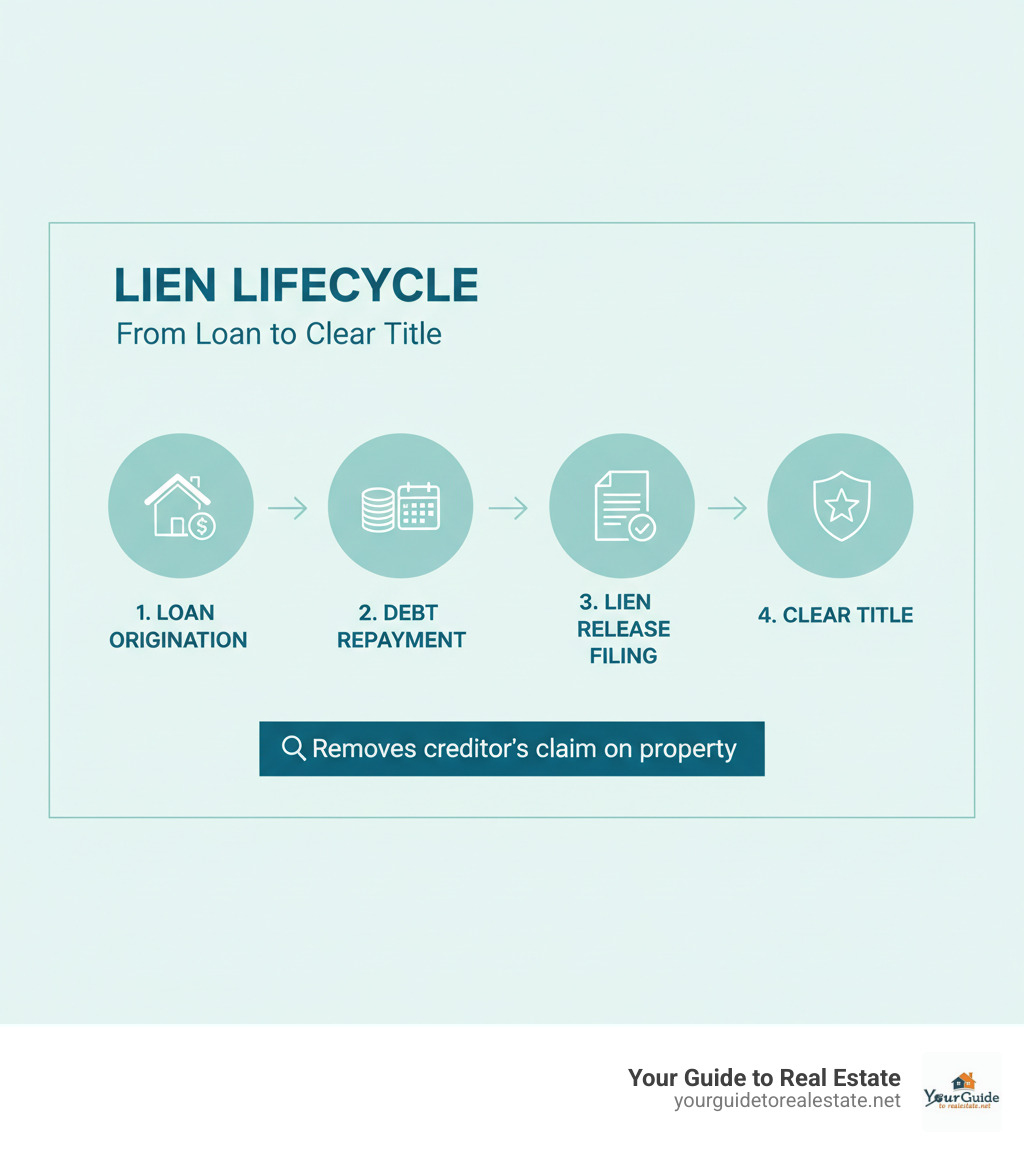
Basic what is a lien release terms:
What is a Lien Release and Why is it Important?
Here’s something we see all the time: someone pays off their mortgage, celebrates their freedom, and then gets blindsided months later when they try to sell or refinance. The problem? They never got the lien released. That old claim is still sitting on their property’s public record, blocking everything.
So what is a lien release exactly? It’s a legal document that officially removes a creditor’s claim from your property after you’ve paid off the debt. Think of it as your receipt for financial freedom—it proves the debt is satisfied and clears your property’s title from the public record.
The purpose of a lien release goes beyond just paperwork. It’s what allows you to actually use your property the way you want. Without it, you can’t sell your home, refinance your mortgage, or even transfer the deed to a family member. The lien stays there, clouding your title, even though you don’t owe a penny.
This is where Understanding Title Insurance becomes crucial. Title insurance protects you from these kinds of title defects, but prevention is always better. Getting your lien released promptly keeps your property record clean and your options open.
We’ve helped countless homeowners steer this process in Dallas, Texas, and Oklahoma City, Oklahoma. The pattern is always the same: clearing your title through a proper lien release is the difference between smooth transactions and legal headaches. For more background on how liens work, check out What is a Lien Release?
The Legal Power of a Release
A lien release isn’t just a courtesy—it’s a legal document with real teeth. Once filed, it permanently extinguishes the creditor’s rights over your property. The lienholder can’t come back later claiming they still have a stake in your home or vehicle.
This document serves as your proof of payment to the world. Anyone checking the public record (and trust us, buyers and lenders always check) can see that you’ve fulfilled your obligation. The debt is done. The claim is gone. You have complete ownership.
That’s what we call financial freedom. Whether you’re taking Easy Steps to Buying Your First Home or planning your next investment, a clear title gives you the power to make moves without asking anyone’s permission.
Where Lien Releases Apply
You’ll encounter lien releases across different types of property and debt situations. In real estate, they’re most common with mortgages—once you make that final payment, you need the release to prove your home is truly yours. The same goes for home equity loans or any other debt secured by your property.
Vehicles work the same way. When you finance a car, the lender holds a lien on the title. Pay off that auto loan, and you’ll need a lien release to get a clear title in your name. Different states handle this differently (some are title-holding states, some aren’t), but the principle stays consistent.
Construction projects bring their own complications. Contractors, subcontractors, and material suppliers can all file mechanic’s liens if they don’t get paid. Each one needs a separate lien release to clear your property. This is why understanding the process matters so much when you’re building or renovating.
Even personal property like equipment, boats, or other valuable assets can have liens attached when used as collateral for loans. Less common in everyday life, but just as important to release when the debt is satisfied.
No matter what type of property you’re dealing with, the principle stays the same: pay the debt, get the release, file it with the right authorities, and verify it’s actually removed from the public record. That’s your path to clear ownership.
Lien Release vs. Lien Waiver: Understanding the Key Differences
If you’ve ever been confused about the difference between a lien release and a lien waiver, you’re not alone. These terms get tossed around interchangeably, especially in construction projects, but they’re actually quite different animals. Understanding the distinction can save you from headaches down the road.
Here’s the simplest way to think about it: a lien waiver stops a lien from being filed in the first place, while a lien release removes a lien that’s already sitting on your property’s public record. One is preventative, the other is reactive.
Let’s break down the key differences:
| Feature | Lien Release | Lien Waiver |
|---|---|---|
| Purpose | Removes an existing lien from public record, proving a debt has been satisfied. | Prevents a lien from being filed in the first place, typically exchanged for payment. |
| Timing | Used after a lien has been filed and the underlying debt has been paid or satisfied. | Used before a lien is filed, often as part of the payment process during a project. |
| Legal Effect | Extinguishes a legal claim that was formally recorded against property. | Surrenders the right to file a lien for a specific amount or period. |
| Use Case | Removing a mechanic’s lien after final payment to a contractor, or clearing a mortgage after payoff. | Subcontractor signing away rights to file a lien for a progress payment received. |
| Nature | Reactive: addresses an existing problem. | Preventative: avoids a potential problem. |
What is a Lien Waiver?
Think of a lien waiver as insurance during the payment process. When you’re paying a contractor, subcontractor, or materials supplier—especially during a construction project—they’ll often sign a lien waiver in exchange for that payment. This document essentially says, “I’m giving up my right to file a lien for this specific amount I’m receiving.”
It’s a smart preventative measure that protects property owners from future claims. After all, you don’t want to pay someone for their work only to have them turn around and file a lien claiming they weren’t paid. The waiver creates a paper trail showing that payment was made and rights were surrendered for that specific amount.
There are two flavors of lien waivers, and the difference matters. A conditional lien waiver says, “I’ll waive my rights if this payment clears.” The waiver only kicks in once the money actually lands in their account. This is the safer option for contractors and suppliers since they’re not giving up anything until they’re sure they’ve been paid.
An unconditional lien waiver, on the other hand, gives up lien rights immediately upon signing, regardless of whether the payment has cleared or even been received yet. This carries more risk for the person signing it. You should only sign an unconditional waiver when you’re holding the check in your hand, the money’s already in your account, or you have absolute certainty the funds are coming.
These waivers often come up during negotiations, similar to how What are Concessions? work in real estate transactions. They’re part of the give-and-take that keeps projects moving forward smoothly.
What is a Lien Release in Practice?
A lien release enters the picture only after someone has already filed a lien against your property. Maybe a contractor didn’t get paid and took the official step of recording a mechanic’s lien with the county. Or perhaps you had a mortgage that’s now paid off, but the old lien is still sitting on your title. Either way, there’s an existing, recorded claim on your property that needs to be removed.
The lien release is your solution. It’s a reactive measure—meaning it addresses a problem that already exists—and it’s the formal document that removes that recorded claim from public record. Here’s what many people don’t realize: even after you’ve paid off the debt completely, that lien doesn’t just disappear on its own. It stays on your property’s public record like an old parking ticket until someone officially removes it.
Whether the debt was satisfied through full payment, a settlement, foreclosure, or even if the lien has expired, the claimant needs to file a lien release to clear your title. Without it, you’re stuck with a clouded title that can prevent you from selling, refinancing, or freely using your property as collateral. The lien release is the necessary final step that officially declares, “This claim is gone, and this property is clear.”
Types of Liens and Their Release Processes
When you’re dealing with liens, one size definitely doesn’t fit all. While the heart of what is a lien release stays the same—it’s that crucial document that wipes away a creditor’s claim after you’ve settled your debt—the actual process can look quite different depending on what type of property or debt you’re dealing with. Let’s walk through the main types you’re likely to encounter and how each one gets resolved.

Property and Mortgage Lien Releases
For most of us, a mortgage lien is the first—and probably the biggest—lien we’ll ever deal with. When you take out a home loan, your lender immediately places a lien on your property. It’s their safety net, giving them a legal claim until you’ve paid back every dollar you borrowed.
Here’s where things get interesting: even after you make that final mortgage payment and celebrate being debt-free, you’re not quite done yet. Your lender must provide you with a lien release, though it might go by different names depending on where you live. In some states, it’s called a “satisfaction of mortgage.” In others, you’ll see it referred to as a “deed of reconveyance.” These documents all do the same thing—they officially tell the world that your debt is paid and the lien is gone.
Most lenders will handle the filing for you, sending the release directly to your county recorder’s office. But here’s our advice: don’t just assume it’s been done. Follow up and verify that the document was actually filed. Without that official release recorded with the county, your title remains clouded, even though you don’t owe a penny. This matters tremendously when you want to sell, refinance, or even pass your property to your heirs. To dive deeper into how mortgages work from the start, check out Understanding Mortgages: A Beginner’s Guide to Home Loans and Mortgage Refinancing Explained.
Vehicle Lien Releases
Cars, trucks, motorcycles—if you financed it, there’s probably a lien on it. Just like with real estate, when you take out an auto loan, the lender places a lien on your vehicle’s title. This gives them the legal right to take back the vehicle if you stop making payments. But once you’ve made that last payment, a lien release transfers full ownership to you, free and clear.
The process varies quite a bit by state. In what are called “title-holding states,” the lender actually holds onto your vehicle’s title until the loan is paid off. Once you’re done paying, they’ll send you the title along with a lien release. In other states, you hold the title from day one, but it shows the lender as a lienholder. When the loan is satisfied, the lender sends you a lien release document that you’ll take to your local DMV to get a new, clean title issued in your name alone.
Many states now use an Electronic Lien and Title (ELT) system, which makes things faster and more secure. The lien information is stored digitally, and when your loan is paid off, the release is processed electronically. No paper shuffling required. If you’re in Texas, for example, you might encounter the Prescribed Form for Release of Lien (Form VTR-266) as part of this process.
Always verify with your DMV that the lien has actually been removed from your vehicle’s record. It’s a quick check that can save you headaches down the road. For more background on how vehicle liens work, you can explore What Is a Lien on a Vehicle?, though keep in mind that specific rules and forms will vary based on where you live.
Construction (Mechanic’s) Lien Releases
Construction projects bring their own unique lien challenges. When contractors, subcontractors, or material suppliers work on a property and don’t get paid, they have the legal right to file what’s called a mechanic’s lien. This type of lien can be filed by anyone who contributed labor or materials to improve your property—from the general contractor down to the person who delivered the lumber.
These liens can be particularly tricky because you might think you’ve paid your general contractor in full, only to find that they didn’t pay their subcontractors, who then file liens against your property. That’s why lien releases are so critical in construction. They’re your proof that everyone in the payment chain has been compensated and won’t be coming after your property later.
In construction, lien releases typically happen in stages as the project progresses. When you make progress payments, you should be collecting lien releases (or lien waivers, which we discussed earlier) from everyone who worked on that phase. At project completion, you’ll want final lien releases from all parties involved. This documentation protects your property title and ensures that your investment remains clear.
Smart property owners combine this practice with other due diligence measures, like using a Home Inspection Cost Calculator to budget properly for their project from the start.
Government and Judgment Lien Releases
Not all liens come from private lenders or contractors. Government entities can place liens too, and these can be particularly serious. If you fall behind on property taxes, the county or city can file a tax lien against your property. The IRS can do the same if you owe federal income taxes—you can learn more about how these work through Information on IRS tax liens. These government liens often take priority over other types of liens, meaning they get paid first if the property is sold.
Court judgments create another type of lien. If someone sues you and wins, they can record that judgment against your property, creating a judgment lien. This means you can’t sell or refinance without either paying off the judgment or having it released.
The good news is that government and judgment liens don’t last forever. Tax liens typically have an automatic release after ten years if they’re not renewed or re-filed. Judgment liens also expire after a certain number of years, depending on your state’s laws. However, we don’t recommend just waiting them out. An official lien release filed after you’ve satisfied the debt is always the cleanest, fastest way to clear your title and restore your property rights. Plus, these liens can be renewed, which would restart the clock and extend your problems for years to come.
The Anatomy of a Lien Release and How to Obtain One
You’ve paid off your debt—congratulations! But here’s the thing: that final payment doesn’t automatically clear your property’s record. Understanding how a lien release is structured and how to actually get one in your hands is essential to ensuring your property title remains squeaky clean.

What Information is on a Lien Release Form?
A lien release isn’t just a casual note saying “all good, we’re square.” It’s a legal document with specific information that identifies the lien, the parties involved, and the property in question. While the exact format varies depending on your state and the type of lien, you’ll typically find these key details on the form.
First, there’s the lienholder name and address—the full legal name and contact information of whoever held the lien, whether that’s your mortgage lender, auto finance company, or a contractor. Then you’ll see the borrower or property owner name, which is your full legal name as the person who owed the debt.
The property description is crucial for making sure the release applies to the right asset. For real estate, this includes a legal description of the property or its street address. For vehicles, you’ll see the Vehicle Identification Number (VIN), along with the year, make, and Certificate of Title Number.
Most forms also list the lien amount—either the original amount of the lien or the specific amount being released. You might also find the date of claim for lien (when the original lien was filed) and a registration number if the lien was recorded against real property.
The heart of the document is the certification statement, which clearly confirms that the lien has been paid in full and that the lienholder releases all claims to your property. This statement needs an authorized signature from someone who can legally represent the lienholder organization.
Finally, most lien releases require notarization. A Notary Public or, for vehicles, an MVD Agent must witness and acknowledge the signature. This adds legal weight and authenticity to the document, making it official in the eyes of the law.
Getting all this information right matters more than you might think. Even a small error—like a misspelled name or wrong VIN—could delay the process or even invalidate the release entirely.
The Step-by-Step Process to Get a Lien Released
Getting a lien release isn’t complicated, but it does require you to stay on top of things. Here’s how the process typically unfolds.
Step one is satisfying the debt. This seems obvious, but it’s worth emphasizing: the debt must be completely paid off according to your agreement terms. Whether that’s your final mortgage payment, the last check for your auto loan, or settling up with a contractor, nothing moves forward until the balance is zero.
Once you’ve made that final payment, request the release in writing. Many lienholders automatically process releases when loans are paid off, but don’t just assume it’ll happen. Send a written request and keep a copy for your records. It’s a simple step that can save you headaches down the road.
When the lienholder sends you the document, review it carefully to make sure all the information is accurate. In some cases, they might file it directly with the appropriate government office on your behalf, but don’t count on it.
Filing with the proper authorities is where many people drop the ball. If the lienholder sends the release to you, it becomes your responsibility to get it filed. For real estate, you’ll need to take it to the county recorder’s office where your property is located—think Dallas County if you’re in Dallas, Texas, or Oklahoma County if you’re in Oklahoma City. For vehicles, head to your state’s DMV or equivalent agency. This filing makes the release part of the public record, which is the whole point.
The final step that too many people skip is verification. Don’t just assume the lien has been removed because you filed the paperwork. Follow up with the county recorder, the DMV, or request an updated title report to confirm the lien is actually gone from your record. This extra diligence protects you from finding problems months or years later when you’re trying to sell or refinance.
What are the Potential Costs?
The good news is that obtaining a lien release won’t break the bank, though you should expect some minor expenses along the way.
Filing fees are the most common cost. Government offices charge a small fee to record the lien release in their system. The county recorder’s office will charge one amount for real estate liens, while the DMV has its own fee structure for vehicles. These fees vary by jurisdiction but are typically quite reasonable.
Some lienholders charge administrative fees to cover the cost of processing and mailing your release document. These are usually modest, though it’s worth asking about them upfront so you’re not surprised.
If your lien release requires notarization and the lienholder doesn’t provide this service, you’ll need to pay a notary fee. Most Notary Public services charge between $5 and $15 per signature, depending on your state.
To give you a concrete example, New York charges approximately $20 for a vehicle title lien release on top of your loan payoff. Your state might charge more or less, but you get the idea—we’re talking about small amounts that pale in comparison to the value of having a clear title and the financial freedom that comes with it.
Potential Problems and Legal Implications
Even when you’ve done everything right—paid off your debt in full and celebrated that final payment—the journey to a clear title isn’t always as smooth as we’d hope. Sometimes, despite your best efforts, getting that lien release can hit unexpected roadblocks. These issues can create what’s called a “clouded title,” where your property’s ownership record isn’t perfectly clear. Think of it like having a smudge on an otherwise pristine document—it might seem small, but it can cause big problems when you need that document to be spotless.

What Happens if a Lienholder Refuses to Release a Lien?
Picture this: you’ve made your last payment, popped the champagne, and are ready to move forward with selling your home or refinancing. Then you find the lienholder hasn’t released the lien. It’s incredibly frustrating, but unfortunately, it happens more often than you’d think. Administrative oversights, disputes over the final payment amount, or simply a slow-moving bureaucracy can all lead to delays or outright refusals.
Here’s the good news: once a debt is fully satisfied, the lienholder has a legal obligation to provide a lien release. They can’t just sit on it indefinitely because it’s inconvenient or they forgot. If you find yourself in this position, you have options.
Start with a formal demand letter. Send a certified letter to the lienholder requesting the release, and include copies of your proof of payment—bank statements, canceled checks, or loan payoff statements. Be clear about your expectation for a prompt response, typically within 10 to 30 days, depending on your state’s laws. Many states actually specify deadlines for lienholders to issue releases after payoff, so mentioning this can add weight to your request.
If your demand letter doesn’t get results, it’s time to seek legal counsel. A real estate attorney can review your situation, explain your rights under state law, and advise you on the best next steps. They’ll know the specific timelines and requirements that apply in your area, whether you’re in Dallas, Oklahoma City, or elsewhere.
As a last resort, you may need to file a lawsuit to compel the lienholder to release the lien. If you can present clear proof that the debt was paid in full—and the court agrees—a judge can issue a court order forcing the release. This is where working with Lien Release Lawyers becomes invaluable. They can steer the legal complexities and represent your interests, ensuring that your property rights are protected.
The bottom line? A lienholder cannot legally refuse to release a lien once you’ve satisfied the debt, unless there’s a genuine, legitimate dispute about payment or contract terms. Don’t let their inaction cost you your financial freedom.
What are the Legal Implications of Not Having a Lien Released?
Now let’s talk about what happens if that lien release never materializes. The consequences can ripple through multiple areas of your financial life, creating headaches that extend far beyond a simple administrative oversight.
The most immediate problem is your inability to sell the property. When potential buyers or their lenders run a title search, that unreleased lien will show up like a red flag. It suggests there’s still an outstanding debt attached to the property, even if you’ve paid every penny. Most buyers won’t touch a property with a clouded title, and their lenders certainly won’t approve financing. This can completely derail your plans and complicate everything outlined in The Ultimate Guide to Selling Your Home: Tips, Timelines, and Tools.
Refinancing becomes equally problematic. Want to take advantage of lower interest rates or tap into your home equity? Not without a clear title. Lenders perform thorough title searches before approving new loans, and an unreleased lien will stop the process in its tracks. You might have 20% equity and stellar credit, but that old lien makes you look like a risk.
Beyond these practical barriers, an unreleased lien creates what’s called a title defect—an official flaw in your property’s ownership record. This can reduce your property’s market value, lead to legal disputes about ownership, and cause endless confusion. It’s like having a parking ticket that never gets cleared from your record, except the stakes are much higher.
There’s also the risk of future claims, though this is less common if the debt is genuinely satisfied. Still, an unreleased lien leaves the door cracked open. If the lienholder’s records are lost, personnel change, or there’s confusion down the line, that old lien could resurface to haunt you. It’s the kind of loose end that can cause problems years later when you least expect it.
At Your Guide to Real Estate, we’ve seen too many people who did everything right—paid off their mortgages, settled their debts—only to find that the paperwork wasn’t properly completed. That lien release isn’t just a formality. It’s the official declaration that your property is truly, completely yours. Without it, even the most diligent property owner can find themselves stuck, unable to move forward with their real estate goals.
Frequently Asked Questions about Lien Releases
We know that dealing with liens can feel overwhelming, especially when you’re trying to understand all the moving parts. That’s why we’ve gathered the most common questions we hear from property owners and buyers just like you. Let’s clear up any confusion about what is a lien release and how it works in real-world situations.
How long does it take to get a lien release?
If you’re wondering when you’ll finally see that lien release document after making your last payment, the honest answer is: it depends. The timeline can vary quite a bit based on where you live, what type of lien you’re dealing with, and how quickly everyone involved processes their paperwork.
Lender processing time is usually the first factor. Most lenders take somewhere between 10 to 30 days to prepare and send out a lien release once they’ve received your final payment. Some might take up to 45 days, especially if they’re dealing with a high volume of requests or have multiple layers of approval. For example, if you’ve just paid off your car loan in New York, you might wait up to 45 days for the DMV to receive and process your title lien release.
Your state’s laws also play a role here. Some states have strict deadlines that require lienholders to issue releases within a specific timeframe after debt satisfaction, while others are more relaxed. There can even be penalties for lenders who drag their feet beyond the legal deadline.
Finally, don’t forget about DMV or county recorder timelines. Even after the lienholder sends the release, it still needs to be officially filed with the right government office. For vehicles, that’s typically your state’s Department of Motor Vehicles. For real estate, it’s the county recorder’s office where your property is located. These agencies have their own processing backlogs, which can add another week or two to the timeline.
The bottom line? Plan for anywhere from 10 to 45 days total from your final payment to seeing that lien officially cleared from public records. If you haven’t heard anything after a month or so, it’s worth following up with the lienholder and the recording office to make sure nothing fell through the cracks.
What is the difference between a conditional and an unconditional lien release?
This question comes up all the time, especially if you’re dealing with construction projects or negotiating payments with contractors. Understanding the difference between conditional and unconditional lien releases can save you from some serious headaches down the road.
A conditional release is exactly what it sounds like—it comes with conditions attached. The lien is only released if the payment clears successfully. Think of it as a safety net. If you write a check and it bounces, or if there’s an issue with a wire transfer, the conditional release essentially becomes void, and the lien can be reinstated. This type of release protects the person or company who’s owed money, making sure they don’t give up their legal rights until they actually have the funds in hand.
An unconditional release, on the other hand, is final and irrevocable the moment it’s signed. There’s no going back. Once you sign an unconditional lien release, you’re giving up all rights to claim that money, regardless of whether the payment has cleared or even been sent yet. This type should only be used when you’ve already received payment, it’s being handed to you right then and there, or you have absolute certainty the funds are guaranteed.
Here’s our best practice advice: use conditional releases for progress payments during a project when money is still flowing back and forth. Save the unconditional releases for final payments when everything is wrapped up and the check has already cleared your bank. This approach protects everyone involved and prevents disputes about who owes what to whom.
Can a lien release be challenged?
Yes, a lien release can be challenged, though it’s not something that happens every day. These documents are designed to be legally binding and final, but there are situations where someone might question their validity or accuracy.
Payment disputes are one of the most common reasons. If there’s disagreement about whether the full amount was actually paid, or if unexpected additional charges surfaced after the release was signed, the lienholder might challenge the release’s validity. Maybe there was confusion about interest calculations, late fees, or outstanding balances that weren’t properly communicated.
Fraud is another serious issue that can invalidate a lien release. If someone forged a signature, misrepresented facts to obtain the release, or used deceptive practices, the document can absolutely be challenged in court. We’ve even seen cases where certain lien forms had to be removed from official websites because they were being used fraudulently.
Inaccuracies on the document itself can also cause problems. If the property description is wrong, the lien amount doesn’t match the records, or the parties’ names are incorrect, these errors might require the release to be corrected or re-filed. In some cases, these mistakes could open the door to legal challenges if they create confusion about what was actually released.
Finally, in complex legal situations—like bankruptcy proceedings, divorce settlements, or estate disputes—a court might need to review the circumstances surrounding a lien release to determine its validity and enforceability.
The key takeaway? Make absolutely sure that every detail on your lien release is accurate before it’s filed. Double-check names, addresses, property descriptions, and amounts. Keep thorough records of all payments and correspondence. This documentation protects you if questions ever arise about whether the lien was properly released.
Conclusion
You’ve made it through the complete journey of understanding what is a lien release, and now you’re armed with the knowledge to protect one of your most valuable assets—your property. Think of a lien release as your official “paid in full” stamp, the document that transforms a property with strings attached into one that’s truly, completely yours.
Whether you’ve just made that final mortgage payment on your home, paid off your car loan, or settled up with contractors on a renovation project, the lien release is what makes it official in the eyes of the law. Without it, you might have paid every penny you owe, but the public record still shows that old claim sitting there, ready to complicate your next move.
We’ve walked through the various types of liens you might encounter—from mortgages and auto loans to construction liens and even tax claims. We’ve explored the difference between releases and waivers, how to obtain the documentation you need, and what to do when things don’t go smoothly. The common thread? A clear title is your gateway to financial freedom. It’s what allows you to sell when you’re ready, refinance when rates drop, or simply rest easy knowing your ownership is unquestioned.
At Your Guide to Real Estate, we’re passionate about helping you steer these sometimes-confusing waters with confidence. We know that real estate can feel overwhelming, but understanding the fundamentals—like how liens work and why releases matter—puts you in control. Your property should be a source of security and opportunity, not stress and complications.
Getting a lien released isn’t just about checking a box. It’s about protecting your investment, preserving your options, and ensuring that when opportunity knocks, your property is ready to answer. Take the time to verify that old liens are properly removed, keep your documentation organized, and don’t hesitate to follow up with lienholders or seek legal help if needed.
Ready to dive deeper into home financing and property ownership? Learn more with our Beginner’s Guide to Home Loans and continue building your real estate knowledge with us.