Why Understanding Insurance Differences Matters for Your Housing Decision
What is the primary difference between homeowners insurance and renters insurance? The fundamental distinction lies in dwelling coverage – homeowners insurance protects the physical structure of your home, while renters insurance does not. Both policies cover your personal belongings, liability, and temporary living expenses, but only homeowners insurance includes coverage for the building itself.
Here’s the quick breakdown:
Homeowners Insurance Covers:
- Building structure (walls, roof, foundation)
- Other structures (garage, shed, fence)
- Personal belongings (furniture, electronics, clothing)
- Personal liability (accidents on your property)
- Additional living expenses (temporary housing after damage)
Renters Insurance Covers:
- Personal belongings (furniture, electronics, clothing)
- Personal liability (accidents in your rental)
- Additional living expenses (temporary housing after damage)
- Does NOT cover the building structure
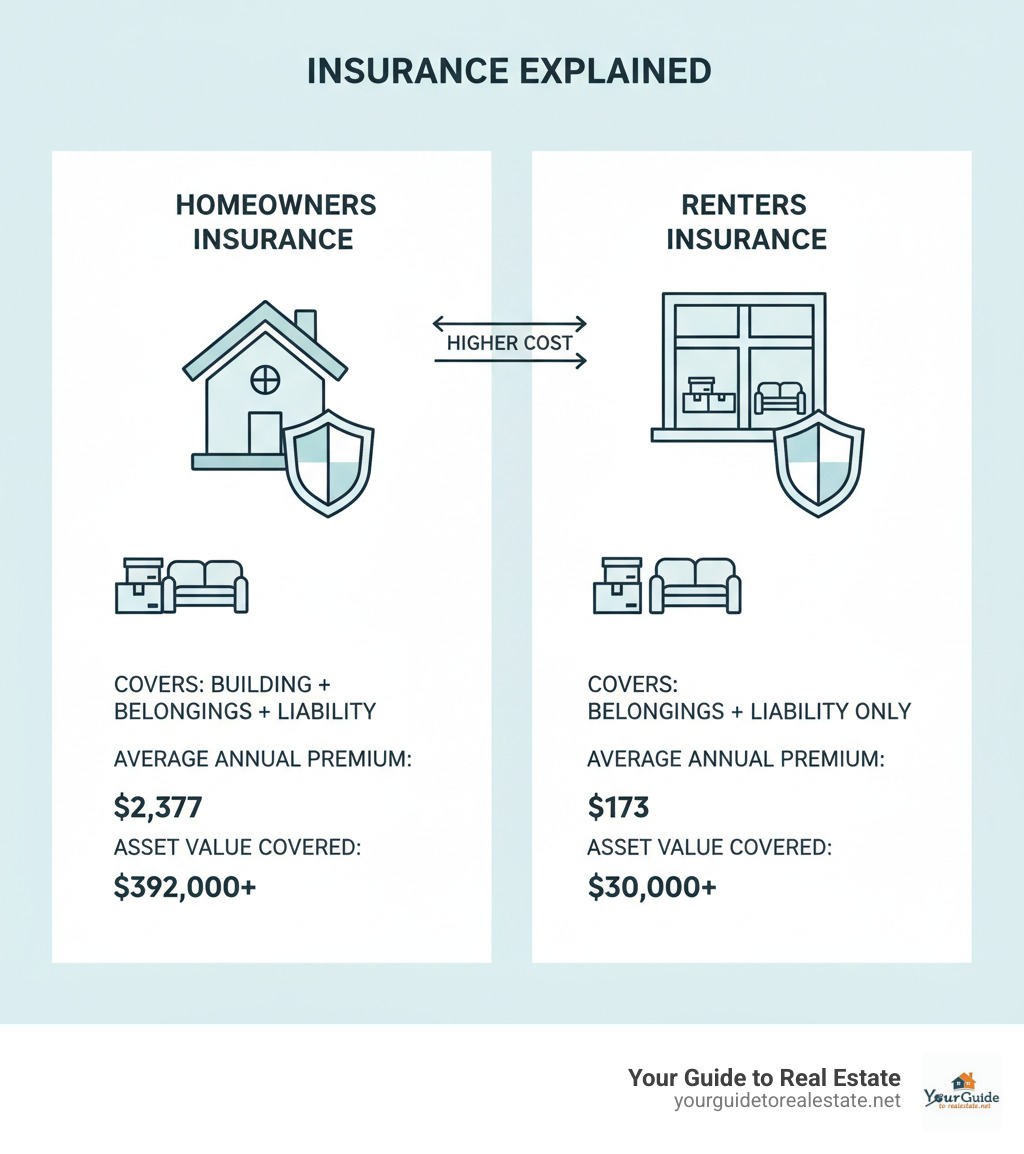
This difference explains why homeowners insurance costs significantly more. According to industry data, the average annual cost of homeowners insurance is $2,377 nationwide, while renters insurance averages just $173. The reason? Homeowners insurance covers much more valuable assets – the average cost to build a single-family home exceeds $392,000, compared to the average renter’s possessions worth about $30,000.
Whether you’re buying your first home or signing a lease, understanding these insurance basics helps you budget properly and avoid coverage gaps. The landlord’s insurance protects the building structure, but your personal belongings and liability exposure remain your responsibility as a renter.
What is the primary difference between homeowners insurance and renters insurance? vocab to learn:
The Core Distinction: Dwelling Coverage
Think of homeowners insurance and renters insurance like two different types of umbrellas. One protects you and the ground you’re standing on, while the other just keeps you dry. That ground you’re standing on? That’s dwelling coverage – the heart of what makes these policies so different.
Dwelling coverage is like a financial safety net stretched under your entire house. It protects the physical bones of your home – the walls that keep you warm, the roof over your head, and the foundation beneath your feet. When a storm rips shingles off your roof or a kitchen fire damages your walls, dwelling coverage steps in to help pay for repairs or even a complete rebuild.
But here’s where it gets interesting. Homeowners insurance doesn’t stop at just your main house. It typically extends this protective accept to other structures on your property too. That detached garage where you store your car? Covered. The garden shed where you keep your lawn mower? Protected. Even that fence marking your property line gets some love from your policy.

For homeowners, this coverage isn’t just nice to have – it’s absolutely essential. With the average cost to build a single-family home exceeding $392,000, you’re talking about protecting a massive investment. Without dwelling coverage, a serious fire or storm could leave you facing hundreds of thousands of dollars in repair costs and rebuilding costs out of your own pocket.
Now, if you’re renting, here’s where things take a sharp turn. Renters insurance doesn’t include dwelling coverage at all. Not a penny. Why? Because you don’t own the building! It’s not your financial interest to protect.
Instead, that responsibility falls squarely on your landlord’s shoulders. They carry their own insurance policy that protects the building structure. So if the apartment building suffers fire damage or the rental house gets hit by a falling tree, your landlord’s policy handles the building repairs – not yours.
What is the primary difference between homeowners insurance and renters insurance?
Let’s cut straight to the chase. What is the primary difference between homeowners insurance and renters insurance? It’s dwelling coverage, plain and simple.
A homeowners policy wraps its protective arms around the entire building structure. When you own your home, you have skin in the game. If something happens to that structure, you’re the one who’ll be writing the checks to fix it – unless your insurance steps in first.
As a homeowner, you’re essentially betting your financial future on that building staying intact. That’s why mortgage lenders are so insistent about insurance. They’ve loaned you hundreds of thousands of dollars with your house as collateral, so they want to make sure their investment is protected too.
Renters live in a completely different world. Your renter’s responsibility stops at your personal belongings and liability. The building itself? That’s the property owner’s responsibility. You’re essentially borrowing space in someone else’s investment, so you’re only responsible for protecting what’s actually yours.
This distinction shapes everything about how these policies work and what they cost. It’s the fundamental reason why homeowners insurance premiums are so much higher than renters insurance – they’re protecting vastly different amounts of value.
Shared Protections: What Both Policies Cover
Despite their big difference in dwelling coverage, homeowners and renters insurance are actually cousins when it comes to several important protections. Both policies understand that life happens, and when it does, you need help picking up the pieces.
Personal property coverage is probably the most relatable protection for everyone. Whether you own or rent, you’ve filled your space with stuff you care about – your comfortable couch, that big-screen TV, your wardrobe, and maybe even some family heirlooms. When fire, theft, or other covered disasters strike, this coverage helps replace your furniture, electronics, clothing, and other belongings.
Then there’s personal liability coverage, which might just be the unsung hero of insurance policies. This protection kicks in when life throws you a curveball and someone gets hurt on your property or you accidentally damage someone else’s stuff. Maybe a guest slips on your icy walkway and breaks their wrist, or your teenager accidentally puts a baseball through the neighbor’s window. Your liability coverage can help with medical bills, repair costs, and even legal fees if things get complicated with accidents and guest injuries.
Finally, both policies include Additional Living Expenses (ALE) coverage – your financial lifeline when your home becomes temporarily unlivable. Whether you own or rent, if a covered disaster forces you out of your home, ALE steps in to help with the extra costs of living elsewhere. This might cover temporary housing costs, hotel bills, restaurant meals when you can’t cook at home, and other necessary expenses while your place gets back to normal.
There’s also medical payments to others coverage, which is like a good neighbor policy. If someone gets hurt on your property – regardless of who’s at fault – this coverage can help pay their medical bills up to your policy limit. It’s a small gesture that can prevent bigger problems down the road.
A Side-by-Side Comparison of Coverages
Now that we’ve explored the fundamentals, let’s put these two insurance types head-to-head to see exactly where they align and where they diverge. This comparison will help clarify what is the primary difference between homeowners insurance and renters insurance in practical terms.
| Coverage Type | Homeowners Insurance | Renters Insurance |
|---|---|---|
| Dwelling Coverage | YES: Protects the physical structure of your home (walls, roof, foundation, etc.) against covered perils, including repair and rebuilding costs. | NO: Does not cover the physical structure of the building. This is the responsibility of the landlord’s insurance. |
| Other Structures | YES: Covers detached structures on your property like garages, sheds, and fences. | NO: Does not cover any structures on the property, as they are owned by the landlord. |
| Personal Property | YES: Protects your personal belongings (furniture, electronics, clothing, etc.) from covered perils like theft, fire, or vandalism. | YES: Protects your personal belongings (furniture, electronics, clothing, etc.) from covered perils like theft, fire, or vandalism. |
| Personal Liability | YES: Covers you if you’re found legally responsible for accidental bodily injury or property damage to others on or off your property. | YES: Covers you if you’re found legally responsible for accidental bodily injury or property damage to others within your rented space or due to your actions. |
| Additional Living Expenses (ALE) / Loss of Use | YES: Pays for temporary housing and increased living costs if your home becomes uninhabitable due to a covered peril. | YES: Pays for temporary housing and increased living costs if your rental unit becomes uninhabitable due to a covered peril. |
Looking at this table, you can see the pattern clearly. The structural elements – dwelling coverage and other structures – are exclusively in the homeowner’s court. Everything else? Both policies have your back in remarkably similar ways.
How Personal Property and Loss of Use Limits Differ
Here’s where things get interesting, and it’s another key piece of understanding what is the primary difference between homeowners insurance and renters insurance. While both policies offer personal property and loss of use coverage, they calculate your limits very differently.
If you’re a homeowner, your personal property limits are typically set as a percentage of your dwelling coverage. Let’s say you have $300,000 in dwelling coverage – your personal property coverage might automatically be 50% to 70% of that amount, giving you $150,000 to $210,000 in coverage for your belongings. It’s a simple formula that assumes your stuff is worth a certain percentage of your home’s value.
Renters take a more hands-on approach. Since there’s no dwelling coverage to base it on, you’ll need to estimate the actual value of your belongings when choosing your personal property limits. This means taking a thorough inventory of what you own – that couch, your electronics, your wardrobe, kitchen items, everything. The average renter’s possessions are worth about $30,000, but your situation might be quite different.
Loss of use limits follow a similar pattern. Homeowners typically get coverage that’s a percentage of their dwelling limit, while renters usually get either a flat dollar amount or a percentage of their personal property coverage. This means if you’re displaced from your rental, the amount available for hotel bills and restaurant meals is tied to the value of your belongings rather than the building itself.
Understanding Covered Perils and Common Exclusions
Both homeowners and renters insurance protect against what the industry calls “perils” – basically, bad things that can happen to damage your property or belongings. Most policies cover the usual suspects: fire, theft, vandalism, windstorms, lightning, explosions, and burst pipes. Some policies are “named perils” (covering only what’s listed), while others are “all-risk” policies (covering everything except what’s specifically excluded).
But here’s the reality check – both types of policies have notable gaps. Flood damage almost always requires separate coverage through the National Flood Insurance Program. Earthquakes typically need their own policy or endorsement. Normal wear and tear isn’t covered because insurance is for sudden, unexpected events, not gradual deterioration.
High-value items deserve special mention. Your standard personal property coverage has sub-limits for expensive items like jewelry and fine art. If you own valuable pieces, you’ll need to “schedule” them separately with additional coverage. For help understanding the value of your possessions, check out more on property valuation.
The good news? Once you understand these basics, you can make informed decisions about what additional coverage you might need, whether you’re protecting a house or an apartment.
Cost Breakdown: Why Homeowners Insurance is More Expensive
When you look at insurance costs, the numbers tell a pretty clear story about what is the primary difference between homeowners insurance and renters insurance. The average homeowner pays $2,377 annually for coverage, while renters spend just $173 per year. That’s more than a $2,200 difference – enough to fund a nice vacation or make a solid dent in your emergency fund!

This dramatic price gap isn’t insurance companies being greedy – it’s simple math based on risk. Think about what each policy actually protects. Your homeowners insurance is essentially promising to rebuild your entire house if disaster strikes. With the average home construction cost hitting $392,000, that’s a massive financial commitment from your insurance company.
Now imagine you’re the insurance company writing that check. A house fire could mean paying out hundreds of thousands of dollars for materials, labor, permits, and months of temporary housing for the family. That’s a lot of financial risk to take on, and higher risk always means higher premiums.
Renters insurance operates in a completely different league. The policy focuses on your personal belongings – your furniture, electronics, clothes, and kitchen gadgets. While losing everything you own would be devastating emotionally, the financial hit averages around $30,000 for most renters. That’s still real money, but it’s a fraction of what it costs to rebuild an entire house.
The insurance company’s potential payout for a renters claim is dramatically lower, so your premium reflects that reduced risk. It’s really that straightforward – less financial exposure equals lower costs for everyone involved.
What is the primary difference between homeowners insurance and renters insurance when it comes to cost factors?
The factors that drive your insurance costs reveal another layer of how these policies differ. For homeowners, your premium depends heavily on the physical property itself and everything that could go wrong with it.
Your home’s replacement cost is the biggest factor by far. This isn’t about what your house is worth on the market – it’s about what it would actually cost to rebuild from the ground up. A sprawling ranch with custom features will cost more to insure than a simple two-bedroom cottage, even if they’re in the same neighborhood. If you’re curious about construction costs in your area, check out How Much Does It Cost to Build a House? to get a better sense of what drives these numbers.
Location plays a huge role in homeowners insurance costs. Houses in tornado alley, wildfire zones, or hurricane-prone coastal areas face much higher premiums. But here’s something that might surprise you – proximity to fire services can make a real difference in your rates. Homes within five miles of a fire department and 1,000 feet of a fire hydrant often get significant discounts. Insurance companies know that faster emergency response means less damage and lower claims.
Your home’s age and condition matter too. That charming 1920s bungalow might steal your heart, but if it still has the original electrical system and plumbing, your insurance company will be nervous about potential claims. Older homes often mean higher premiums unless you’ve updated the major systems.
For renters, the cost equation is much simpler and more personal. The value of your belongings is your biggest cost driver. If you’re a minimalist with basic furniture and a few electronics, you’ll pay less than someone with a house full of high-end gadgets and designer furniture.
Crime rates in your area affect renters insurance more than homeowners insurance because theft is a bigger concern for renters. If you’re in a neighborhood with higher break-in rates, expect to pay a bit more for coverage.
Both homeowners and renters can control costs through their deductible choice. Agreeing to pay a higher amount out-of-pocket before insurance kicks in will lower your annual premium. It’s a trade-off between monthly savings and potential future costs if you need to file a claim.
Your credit score also influences rates for both types of policies in most states. Insurance companies have found that people who manage credit responsibly tend to file fewer claims, so good credit often means better rates.
The bottom line? While both policies consider your personal risk factors, the sheer complexity and cost of insuring an entire building structure means homeowners insurance will always be the more expensive option. But when you consider that it’s protecting what’s likely your largest financial asset, those higher premiums start to make perfect sense.
Is Insurance Required? Homeowner vs. Renter Mandates
Here’s something that might surprise you: neither homeowners nor renters insurance is legally required by state law anywhere in the United States. You won’t get a ticket from the government or face legal penalties for going without coverage. However, before you get too excited about saving money, there’s a big “but” coming your way.
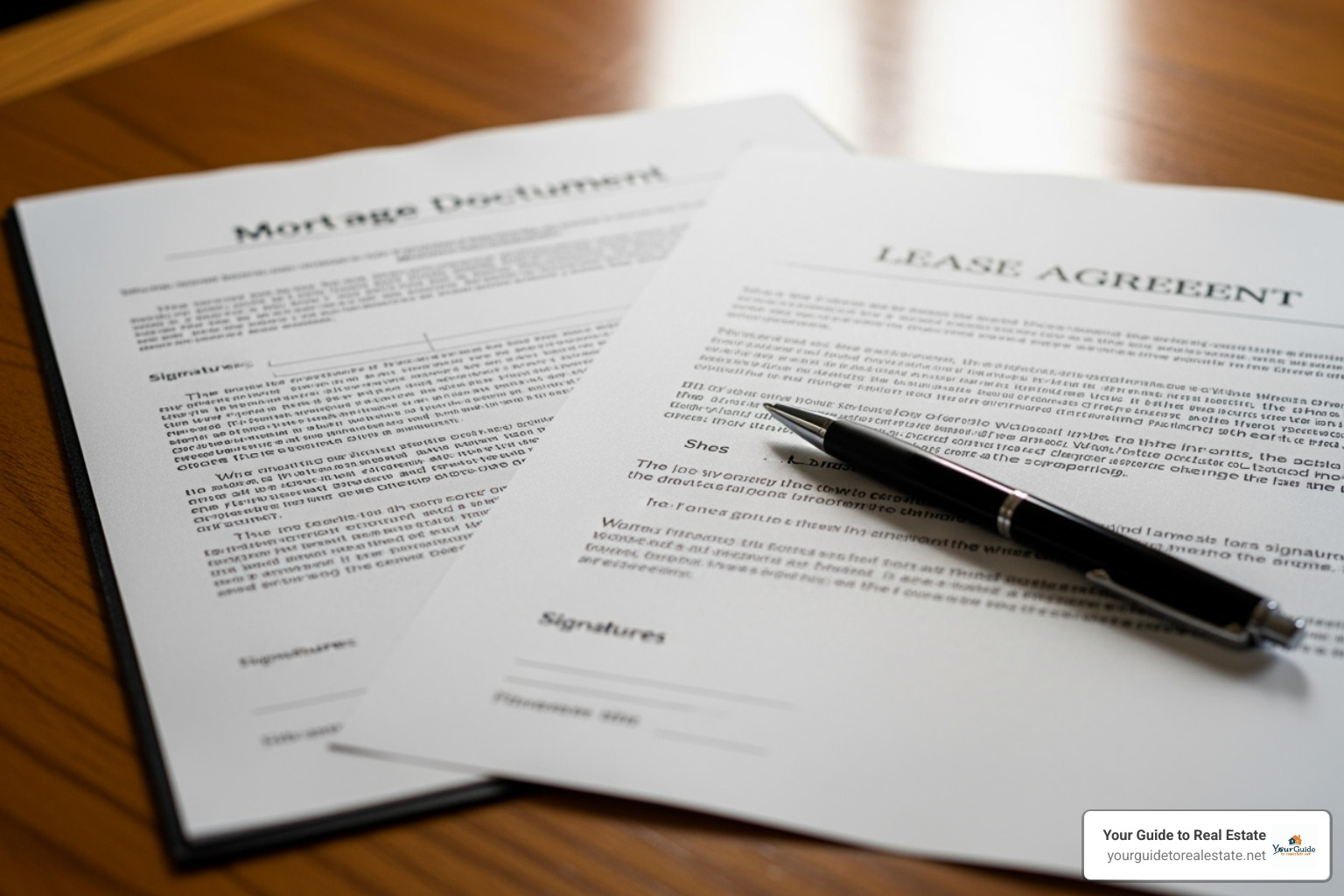
While the government doesn’t mandate these policies, other powerful players in your housing journey absolutely do. For homeowners, your mortgage lender will almost certainly require coverage. For renters, your landlord or property management company often includes insurance requirements right in your lease agreement.
The reality is that going without insurance is an enormous financial gamble. According to the Consumer Federation of America, 6.1 million American homeowners without coverage are rolling the dice with their biggest investment. When disaster strikes – and it will eventually – these uninsured homeowners face paying tens of thousands of dollars out of their own pockets for repairs, rebuilding, or liability claims.
For homeowners, losing insurance coverage could mean losing your entire home investment. For renters, it might mean losing everything you own and potentially facing a massive lawsuit if you accidentally cause damage or someone gets hurt in your rental. These aren’t risks worth taking, regardless of whether the law requires coverage.
Homeowners Insurance and Mortgages
If you have a mortgage, your homeowners insurance isn’t really optional – it’s a non-negotiable requirement from your mortgage lender. This isn’t your lender being difficult; they’re protecting a huge financial investment they’ve made in your property.
Think about it from their perspective: when you take out a home loan, your house serves as collateral for that loan. If your home burns down, gets destroyed by a tornado, or suffers major damage from any other covered disaster, their collateral could be significantly devalued or completely wiped out. That’s a risk no lender wants to take.
Your mortgage agreement will specifically require you to maintain adequate homeowners insurance coverage for the entire life of your loan. This typically means insuring your home for at least its replacement cost – enough to rebuild it completely if necessary. Many lenders make this even easier by including your insurance premium in your monthly mortgage payment through an escrow account. They collect the money from you each month and pay your insurance company directly, ensuring your coverage never lapses.
This system protects both you and your lender, giving everyone peace of mind that the property investment is secure. If you’re new to the mortgage world, our guide on Understanding Mortgages: A Beginner’s Guide to Home Loans can help you understand how all these pieces fit together.
Renters Insurance and Lease Agreements
While no state law requires renters to buy insurance, don’t be surprised if your landlord does. It’s becoming increasingly common for lease agreements to include specific clauses requiring tenants to purchase and maintain renters insurance. This isn’t your landlord trying to squeeze extra money out of you – it’s actually a smart protection strategy that benefits everyone involved.
From your landlord’s perspective, requiring renters insurance creates several important protections. First, it ensures that if your personal belongings are destroyed in a fire or other covered event, you have the financial means to replace them without expecting the landlord to help. This reduces the risk of disputes where tenants might otherwise blame property owners for their losses.
More importantly, renters insurance provides crucial liability protection. If you accidentally cause damage to the building – maybe you leave something on the stove and start a kitchen fire – your insurance can cover the repair costs. If a guest gets injured in your rental unit and decides to sue, your liability coverage can step in to handle the claim. This significantly reduces the likelihood that the landlord will be dragged into a lawsuit or held responsible for your actions.
This requirement creates clearer lines of responsibility and helps maintain better landlord-tenant relationships. While renters insurance might feel like an extra expense, it’s often a mandatory one that provides valuable protection for both you and your property owner. At an average cost of just $173 per year, it’s also one of the most affordable ways to protect yourself from potentially devastating financial losses.
Frequently Asked Questions about Home and Renters Insurance
We’ve covered a lot of ground, but it’s natural to have more questions when it comes to protecting your home and belongings. Let’s tackle some of the most common inquiries we hear from folks navigating the insurance world.
What’s the difference between renters insurance and property owner insurance?
This is an excellent question that often causes confusion! When people refer to “property owner insurance,” they’re usually talking about landlord insurance – a specialized policy for people who own rental properties but don’t live in them. This is quite different from both homeowners insurance and renters insurance.
Landlord insurance (property owner insurance) is designed specifically for individuals who own property and rent it out to others. Like homeowners insurance, it covers the dwelling structure itself, protecting the owner’s investment in the building. However, it goes beyond basic homeowners coverage with unique protections that landlords need. Liability for property owners is crucial – this protects landlords if they’re found liable for injuries on the property, such as when a tenant or guest gets hurt due to a structural issue they’re responsible for maintaining.
One of the most valuable features is loss of rental income coverage. If the property becomes uninhabitable due to a covered event like a fire, this coverage replaces the rent payments the landlord would have received while repairs are being made. Imagine losing months of rental income while your property is being rebuilt – that’s exactly what this coverage prevents.
However, landlord insurance has a clear boundary: it absolutely does not cover the tenant’s personal belongings or the tenant’s personal liability. That’s where renters insurance comes in.
A tenant’s policy (renters insurance) focuses entirely on the person living in the rented space. It protects your personal belongings – all those possessions you’ve accumulated in your rental unit. It also provides tenant liability protection, which is essential if you accidentally cause damage to the property or if someone gets injured in your space. Plus, it includes additional living expenses to cover temporary housing if your rental becomes uninhabitable.
The key insight here is that landlord insurance protects the owner’s investment in the rental property itself, while renters insurance protects the tenant’s assets and liabilities within that property. They’re completely separate policies serving different people with different needs, which is why what is the primary difference between homeowners insurance and renters insurance becomes even clearer when you add landlord insurance to the mix.
How much personal property coverage do I need as a renter?
Determining the right amount of personal property coverage as a renter requires some detective work, but it’s absolutely worth the effort. Unlike homeowners who might have their personal property coverage automatically calculated as a percentage of their dwelling coverage, renters need to make a conscious decision based on what they actually own.
The foundation of getting this right is creating a home inventory. This might sound tedious, but think of it as getting to know your stuff better! Walk through every room of your rental unit and catalog everything you own. We’re talking about major items like furniture, electronics, and appliances, but don’t forget the smaller things that add up quickly – clothing, books, kitchen gadgets, linens, and even that collection of coffee mugs you’ve been building.
When estimating values, you’ll encounter two important concepts: replacement cost versus actual cash value. Replacement cost pays you what it would cost to buy a brand new, similar item today, without any deduction for how old your stuff is. Actual cash value, on the other hand, factors in depreciation, meaning you’d get less money for older items. While actual cash value policies cost less upfront, they can leave you scrambling to cover the difference when you’re actually replacing your belongings.
Documentation is your insurance claim’s best friend. Take photos or videos of your belongings, and keep receipts for major purchases. Store this inventory somewhere safe – ideally in cloud storage or another off-site location so you can access it even if your home is damaged. Many insurance companies offer coverage calculators on their websites to help you estimate your total personal property value.
Don’t forget about high-value items that might need special attention. If you have expensive jewelry, fine art, high-end electronics, or collectibles, standard policies often have sub-limits that might not fully cover these items. You may need to “schedule” these valuable possessions with specific endorsements to ensure full protection.
Does homeowners insurance cover everything in my house?
While homeowners insurance is incredibly comprehensive, the honest answer is no – it doesn’t cover absolutely everything that could go wrong or every single item you own. This is one of the most common misconceptions we encounter, and understanding the limitations can save you from unpleasant surprises down the road.
Policy limits are the first reality check. Every part of your coverage – dwelling, personal property, liability – has a maximum payout amount. If your personal property coverage is set at $200,000, that’s the absolute most you’ll receive for all your belongings combined, regardless of their actual total value. This is why accurately assessing your home’s replacement cost and your possessions’ value is so crucial.
Sub-limits for valuable items can catch many homeowners off guard. Your policy might provide $200,000 in personal property coverage overall, but it could have a $2,500 sub-limit for jewelry theft or a $3,000 limit for firearms. If your grandmother’s diamond necklace is worth $8,000, you’d only receive $2,500 unless you’ve added scheduled personal property endorsements to specifically cover high-value items at their full worth.
The excluded perils we discussed earlier – flood damage, earthquakes, and normal wear and tear – remain excluded regardless of how comprehensive your policy seems. Maintenance-related issues are particularly important to understand. Your insurance covers sudden, accidental events, but it won’t pay for damage that results from neglecting your home’s upkeep or the natural aging process.
If you run a business from home, your standard homeowners policy likely won’t adequately cover business equipment, inventory, or liability related to your commercial activities. You might need specific endorsements or separate commercial coverage to fill these gaps.
The key takeaway? Read your policy carefully, understand its limits and exclusions, and have honest conversations with your insurance agent about your specific needs. This proactive approach ensures your coverage truly matches your “everything.”
Conclusion
Understanding what is the primary difference between homeowners insurance and renters insurance might seem like insurance jargon at first, but it’s actually one of the most important financial concepts you’ll encounter in your housing journey. The answer is beautifully simple: dwelling coverage. Homeowners insurance protects the actual building you live in, while renters insurance doesn’t need to because that’s your landlord’s job.
This fundamental difference ripples through everything else – from the thousands of dollars in premium differences to the way coverage limits are calculated. When you own a home, you’re not just protecting your furniture and clothes; you’re safeguarding a $392,000+ investment in bricks, mortar, and memories. When you rent, your focus shifts to protecting the belongings that make that space feel like home, along with your personal liability and temporary housing needs.
What’s reassuring is that both policies share the same protective spirit when it comes to your personal belongings, liability coverage, and additional living expenses. Whether you own or rent, you’re covered when life throws those unexpected curveballs – from kitchen fires to slip-and-fall accidents to temporary displacement after a storm.
The financial responsibility aspect can’t be overstated. We’ve seen how mortgage lenders require homeowners insurance to protect their investment, and increasingly, landlords are requiring renters insurance to protect both parties. It’s not just about meeting requirements, though. It’s about sleeping soundly at night, knowing that a single disaster won’t wipe out years of hard work and savings.
Making informed decisions about insurance is part of taking control of your financial future, whether you’re renting your first apartment or buying your dream home. These choices shape your overall housing costs and your peace of mind. At Your Guide to Real Estate, we’re here to help you steer every step of your real estate journey with confidence and clarity.
If homeownership is on your horizon, understanding insurance is just the beginning. The world of mortgages, down payments, and home loans can feel overwhelming, but it doesn’t have to be. Get a complete overview of home loans with our beginner’s guide to mortgages and find how our proven framework can turn what feels like a stressful process into an exciting step toward your future.